Home page
Quantum computers are useless forever
Oxford ionics useless hyped computer
IonQ, Quantinuum's fake drug discovery
(Fig.1) Quantum computer companies (= IonQ, Quantinuum.. ) need to spread overhyped fake news to get investment money and hide their deadend impractical quantum computers.
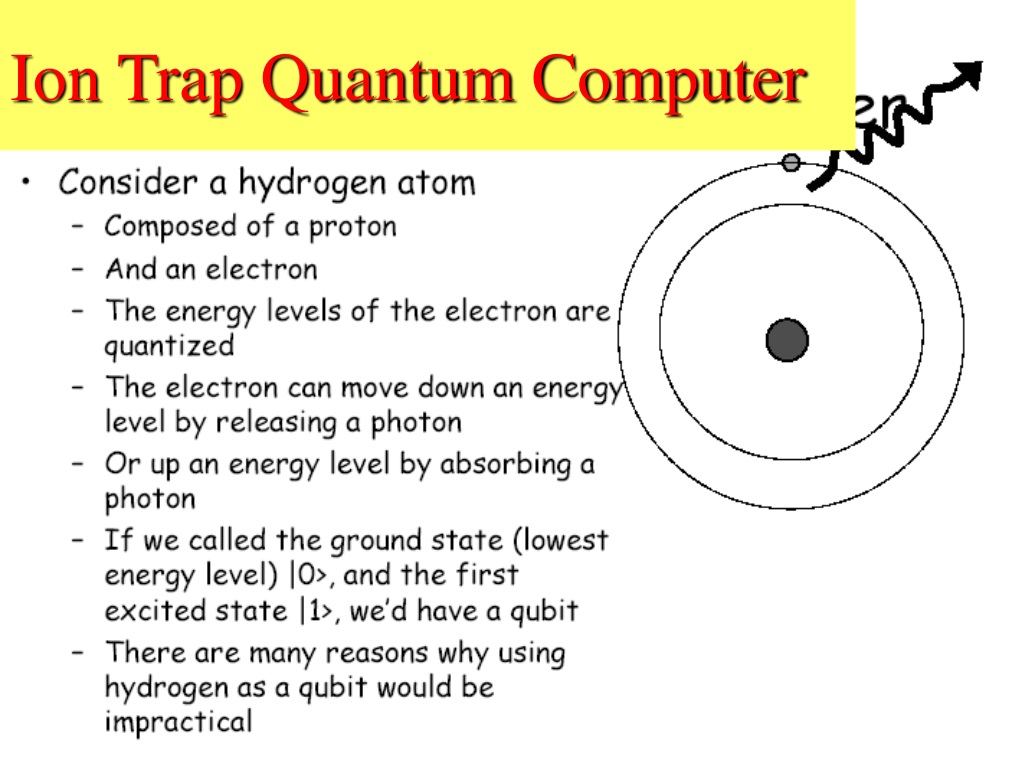
Ion-qubit quantum computers using each ion's two energy states as one qubit's 0 or 1 bit values (= controlled by laser light ) are useless forever, contrary to hypes.
Ion qubits unstably trapped in electromagnetic field used in IonQ ( this or this-2nd-paragraph = only 36 qubits = one qubit takes only 0 or 1 value = still Not a computer ) and Quantinuum with only 98 qubits can never to scaled up to more than 200 qubits, let alone to millions of qubits required for a (illusory) practical quantum computer ( this or this-4th-paragraph ).
This or this-summary says -- Unscalable ion qubits
"IONQ's trapped Ion qubits technology (= fraud, this-p.5 ) is Not scalable enough for Quantum Supremacy ( this-introduction-1st-paragraph )."
This or this-12~14-paragraphs say -- Ion qubits useless forever
"Trapped-ion qubit computers also have a scalability problem. Each chip can contain at most a few tens of ions without the interactions among them becoming too complex to control. Reaching millions of qubits will require moving ions between modules, a feat scientists have yet to reliably achieve."
This or this-Trapped ion quantum computers-4th-paragraph (2026) says
"Scaling is the main challenge. Adding more ions to a single trap makes the system harder to control. Connecting multiple traps to build larger systems adds communication overhead between modules."
Ion qubits are too slow to be practical ( this-p.11-Table.1 ).
This or this-9th-paragraph says -- Impractical ion qubits
"but it is Not clear how scalable these (ion qubit) devices are... In QCCD (= used in Quantinuum ) the trapped ion qubits are shuffled between different processing zones using dynamic electric fields. This may seem cumbersome"
This-p.3-right-2nd-paragraph (2025) says 6nbsp;-- Too slow ion qubits
"Although QCCD enables flexible qubit connectivity,
several scalability challenges remain. First, as physical
shuttling of ion qubits is required, the overall transportation time increases with system size"
The 9th, 11th paragraphs of this or this (2025) say -- Error-prone qubits
"they could not only prepare two magic states (= some qubit state mixing 0 and 1 bit states with some probabilities ) from just eight physical qubits (= just 8 bitstring, still Not a computer ), but also perform a two-qubit non-Clifford gate with a logical error rate of about one mistake per 5,000 operations (= still impractically bad error rate far higher than the practically-required error rate of 10-15, this-p.7-Table II )"
"Our simulations (= just simulation, still unrealized ) suggest we can use roughly 40 physical qubits (= still far from millions of qubits required for a practical quantum computer ) to create one very high-fidelity magic-state qubit (= still one reliable qubit 0 or 1 has Not been realized )"
p.4-Fig.5 says -- Illegitimate post-selection
" the magic states are
prepared using pre-selection... post-selection"
p.5-left-IV says -- Too high error rate
"Quantinuum H2-1 trapped-ion
quantum processor.., and 56 qubits (= too small numbers of qubits, still Not a quantum computer ) total"
"the average acceptance rate across
all single-copy experiments is 82.58% (= 20% results were discarded as errors )"
"The acceptance rate is 65.73%
and 3 logical |−1⟩ state (= 35% results were discarded as errors )"
↑ So this Quantinuum research just discarded erroneous results by the illegitimate pre-selection (= repeat and reset until success qubits' results were obtained = very time-consuming ) and post-selection (= erroneous results were discarded without error correction ), so only 65 ~ 80% results were accepted ( this-p.6 ).
↑ So the actual error rates were 35 ~ 20 % in just less than 56 ion qubits, which is completely impractical.
This Quantinuum's p.2-right-3rd-paragraph says -- Illegitimate trick
"Upon
failure to verify the preparation a logical |0⟩ state, the
qubits can be conditionally reset and the fault-tolerant
preparation can be re-attempted in a repeat-until-success
fashion or pre-selected upon verification (= primitive, time-consuming method without error correction )"
This Quantinuum's p.1-right-last-paragraph says -- Post-selection cheating
" When an
uncorrectable state is detected, our fault-tolerance procedure rejects the trial. This postselection"
↑ So contrary to the overhyped fault-tolerant quantum computer news, they just illegitimately discarded erroneous results (= pre- and post-selection ) without quantum error correction in just less than 56 ion qubits (= unable to be scaled up ).
This or this recent fake quantum advantage of Quantinuum ↓
11th-paragraph says
"Imagine all the possible answers to a problem are secretly divided into two equal groups, A and B. You're given one randomly selected answer from group A (= wrong answer bitstrings ), and challenged to return an answer from group B (= right answer bitstrings )."
12th-paragraph says -- Classical computer given wrong answer
"For a classical computer,.. It knows the answer it was given belongs to A (= wrong answer ), so it knows not to return that one. But it doesn't know which of all the other possible answers belong to A and which belong to B."
15th-paragraph says
"the quantum computer can receive a state containing the entire set A in superposition (= No quantum superposition is used in this research )"
16th-paragraph says -- Quantum computer given right answer
"the quantum computer transforms the state representing set A into one representing its complement, set B."
17th-paragraph says
"Only then does it measure the state, producing an answer from set B. In an ideal, error-free quantum system, this strategy wins every time." ← A quantum computer given right answers (= B ) can always return right answers with No quantum advantage
18th-paragraph says
"For a classical computer, the task is exponentially more difficult. It needs to measure the incoming state to obtain one randomly selected answer from group A, then try to return an answer from group B."
28th-paragraph says -- Error-prone quantum computer
"At the largest scale tested – 37-bit strings (= just 37-qubits, still Not a quantum computer ) – the system didn't quite achieve the theoretical ideal performance," ↓
↑ So this research secretly divided all 2n bitstring states (= n is the number of qubit, each qubit takes only 0 or 1 value ) into two groups where half of all 2n bitstrings are the wrong bitstrings A, and the other half of them are the right bitstrings B.
A classical computer is given one of the wrong bitstrings of A, and asked to guess bitstrings belong to B, which success rate is almost 50% (= through the classical computer is errorless ) when the number of qubit increases.
On the other hand, they unfairly made only a (useless) quantum computer get the right bitstrings of B, so the quantum computer always gave the right answer with 100% success rate (= whether right bitstrings B or not was indirectly known by mearsuring an ancillary qubit b in this-p.3-Fig.1B ← Hadamard H gate randomly flips each qubit into 0 or 1 without superposition ). ↓
↑ Today's quantum computers are useless, too error-prone, cannot correct errors ( this-lower-Scaling will likely require error correction ).
Even if the error-prone quantum computer's error rate was 80%, half of them happened to belong to the right answer bitstrings of B, so its error rate was misleadingly counted as 40%, which always surpassed the errorless classical computer's success (= error ) rate of 50%, which is an unfair fake quantum advantage.
This or this-7th-last-paragraph says - No quantum advantage
"This result does Not mean that quantum computers have surpassed classical machines in practical cryptanalysis or materials computation"
↑ As a result, this is unreal quantum advantage that unfairly told a (error-prone, useless ) quantum computer right answers that were unknown to a errorless classical computer.
Overhyping media report fake meaningless IonQ's breakthrough in CPU-powered quantum error correction.
Quantum computers are impractical forever, cannot get right answers due to too many errors that cannot be corrected.
So IonQ used only a classical computer (= CPU ) called decoders to simulate the illusory quantum computer's error correction, which is scientifically meaningless ( this or this-4th-paragraph )
↑ Using only classical computers for artificially generating errors and correcting those errors means all quantum computing companies such as IonQ have already given up creating practical quantum computers. ↓
This or this site on the same fake IonQ's quantum error correction ↓
1st-paragraph says -- No quantum computer used
"However, the input was simulated error data generated by IonQ from a noise model—No actual quantum computer was used"
3rd-paragaraph says -- Classical computer needed
"In quantum error correction, a classical computer reads clues about errors occurring in qubits (the syndrome) and continuously infers where errors have occurred. This inference process is decoding, and it must run in parallel with the quantum computation. If decoding falls behind, unprocessed information accumulates, forcing the quantum computation to wait."
11th-paragraph says -- Unfair comparison
"Only the 408-logical-qubit circuit was evaluated at a 5 ms cycle, while the two 102-logical-qubit circuits were measured at 1 ms. Given that the time available for decoding differs by a factor of five, one cannot conclude from this table that larger scale necessarily leads to smaller stretch."
5th-last-paragraph says -- Not get correct results
"In other words, what these figures measure is whether the decoder completes its work within the time budget— Not whether the computation's results are correct."
↑ This IonQ useless research did Not aim to get right answers, because they did Not show actual (logical qubit) error rate ( this or this-last-What IonQ still need to show ).

Feel free to link to this site.