Home page
Quasiparticle is unreal
Fake Hawking radiation
Unreal exciton-polariton
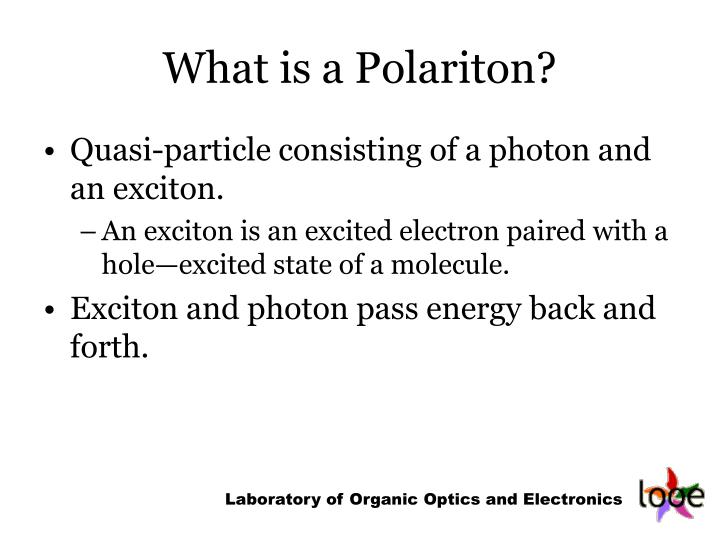
(Fig.1) Quantum mechanics can only describe an electron (+ a hole ) transiently excited by laser light as unreal quasiparticle models such as exciton and polariton (= exciton + a photon ), which are useless for any technologies.
The present unphysical quantum mechanics can only describe materials transiently excited by light as fictional polariton quasiparticle model consisting of another fictional exciton quasiparticle (= a fictional particle representing an electron and a hole transiently excited by light ) and a photon (= light ).
↑ This fictional old quantum mechanical polariton quasiparticle model introduced in 1950s, which is expressed only as unphysical math symbols ( this-p.3-(4), this-p.3-(15) ) lacking real particle shape, has been useless for any technology, unable to clarify real physical mechanism based on real particles.
Fictional polariton quasiparticle model is useless for any technologies such as computers, transistors, lasers,.. contrary to an incredible amount of overhyped fake news.
This recent news (8/2025) says ↓
4th-paragraph says -- Unstable useless polaritons
"Polaritons form when photons (particles of light) interact so strongly with excitons (energy states within molecules) that the two merge into a new quantum entity. The catch is that polaritons are notoriously short-lived, usually releasing their energy before they can do much"
5th-paragraph says -- Impractical polaritons
"Our work shows that polariton-driven chemistry is real, though still extremely challenging to control."
Last-paragraph says -- Still impractical polariton
"a step toward (= still useless, just hype) designing reactions that are more efficient, flexible, and energy-saving."
Quantum mechanics is useless, cannot predict any multi-electron phenomena.
Quantum mechanics can only describe materials transiently excited by light as unreal quasiparticle models such as polariton and exciton lacking real shape with free parameters that cannot predict anything.
This or this-p.10-2nd-paragraph says -- Free adjustable parameters
"The background permittivity (and oscillator strength were adjusted to 9.54 and 0.4,
respectively, to match experimental measurements"
This-p.7-left-2nd-paragraph says -- Free parameter, No prediction
"where σ is the fitting parameter defined individually for each chosen
experimental realisation"
This-p.4-right-3rd-paragraph says -- No quantum mechanical prediction
"Using the semiclassical formula" ← No quantum mechanical prediction
(Fig.2) Useless quantum mechanical polariton quasiparticle model needs fake news.
To hide the inconvenient fact that the current fictional quantum mechanical quasiparticle models have hampered science, an incredible amount of overhyped fake news tries to connect the useless polariton quasiparticle with imaginary application such as polariton laser, transistors, neuromorphic and quantum computers.
The 13-14th, last paragraphs of this overhyped news (5/29/2025) say
" The electrons in the material are excited by the incident light and coupled to the light particles (= photons )."
"Experts call these hybrid light-matter particles exciton-polaritons (= fictional quasiparticle )"
"Potential (= meaning "still unrealized" ) applications include, for example, fast optical switches, neuromorphic computing, so-called polariton lasers," ← fake news ↓
↑ This research paper ↓
p.1-abstract says Nothing about any practical use such as fast switches, neuromorphic computing, laser (= so this polariton quasiparticle research is useless ), contrary to the above hyped news.
p.9 says -- Unseen quasiparticles
This research used optical spectroscopy just measuring how incident light was absorbed or re-emitted by material ( this-p.2 ) to imagine (= Not directly see ) fictional exciton-polariton quasiparticles.
p.9-right says -- No quantum mechanical prediction
this research relied on artificial exciton-polariton quasiparticle model and freely-fitting interaction parameters γ, g (= allegedly representing electrons transiently excited by incident light ) with No quantum mechanical prediction ( this-p.10-11 ).
The 6th-paragraph of this overhyped news (4/17/2025) says
"Polaritons, also known as hybrid light-matter states,... which could (= just speculation, still useless ) enable faster and more energy-efficient quantum computing and communication technologies" ← hype
↑ This research paper's p.1-abstract says Nothing about any practical use such as quantum computing and communication, contrary to the above hyped news.
In this way, there is a wide discrepancy between the overhyped fake science news and the actual research paper.
(Fig.3) All optical logic gate based on fictional polariton quasiparticle transiently excited by input light is impractical for a computer forever.

Physicists try to utilize the hopeless polariton quasiparticles (= light + excited electron ) for the pie-in-the-sky all-optical computers using only light as a bit lacking memory storing light.
This-How do you store data optically ?-1,3rd-pargraphs say -- No memory
"another important challenge is optical data storage—you can't simply stop light from propagating to store its data."
"The greatest challenge is developing large optical memory, analogous to the dynamic random access memory in electronic computers, as it’s hard to confine light and store it for longer"
↑ Unlike the present practical computers with the compact stable electrically-driven transistors and memory, the dreamlike all-optical computers using only fragile light can Not confine or store light, which is always flying at the fastest speed, in stationary memory, so impractical forever.
The 2nd, 3rd paragraphs of this say
"The most obvious challenge with optical computers lies in their currently high cost and low-to-middling performance"
"optical fibers are relatively large when compared to electrical traces. After all, transistors have been developed well into the nanometer scale, while visible light is on the scale of hundreds of nanometers. Additionally, the size of transistors is much smaller than the optical crystals utilized in many optical transistor designs. Furthermore,.. their long-term data reliability is currently unproven,"
(Fig.4) An impractical bulky polariton transistor where outut light (= output bit 0 or 1 ) is changed by the existence of seed light (= input bit 0 or 1 ) affecting another input pump light (= another input bit 1 ) with No memory storing light.
Polariton transistors are impractical, bulkier, using only lights (= one input light is influenced by another input light as bits 0 or 1, this or this-p.3 ) with No memory storing lights in imaginary all-optical computers.
The last paragraph of this overhyped news (4/30/2025) says
"The results of the study are another important step (= still unrealized ) toward the creation of optical computers that can work hundreds of times faster than traditional computers."
↑ This research paper ↓
p.1-Fig.1 shows -- Impractical transistor, No memory
This polariton transistors just got laser light through some material with No memory storing the light.
p.4-right-last-paragraph says -- Still useless polariton
"we predict sub-THz bandwidth as the upper
limit for the operation of polariton transistors, signifying
the importance for future progress (= talk about uncertain future, still unrealized )"
p.6~p.9 shows -- No quantum mechanical prediction
This research just used fictional exciton-polariton quasiparticle model and artificially-chosen parameters to simulate the impractical bulky optic logic gate without quantum mechanical prediction.
The 3rd paragraph of this other overhyped news (7/25/2024) by the same team as this says
"The results of this study bring scientists closer (= still unrealized ) to the long-held dream of creating optical computers" ← hype
↑ In this research, they illuminated some material with pump laser light (= transiently exciting fictional exciton-polariton quasiparticles ? ), which emitted output light (= 1 ) or not (= 0 ), depending on additional input seed lights A and B (= optical logic gate ? ), which is treated as (impractical) optical NOR gate ( this-p.2-4 ).
↑ Just measuring light with No memory storing light in useless polariton transistors.
↑ Making a single bulky impractical optical gate or transistor (= one gate's size is too bulky = one light spot > 26μm + 50mm big optical lens far bigger than the ordinary non-optical transistor of less than 50nm, this-p.5-right-spectroscopy ) alone lacking storing memory can Not realize practical optical computers that will need (illusory) memories storing the flying light for a long time, which is impossible to realize forever.
Polariton transistors (= one input light is influenced by whether another input seed light corresponding to a bit 0 or 1 is applied or not ) are still impractical, bulky, error-prone with No memory storing lights even in 2026.
The 2nd-paragraph of this (2026) says
"Exciton-polaritons, hybrid (unreal) quasiparticles arising from the strong coupling of photons and excitons within semiconductor microcavities,... all-optical switching operations (= all lights with No memory to store these lights )"
↑ This research paper ↓
p.1-abstract-lower says -- Bulky polariton transistor
"With a device area as small as 2 × 2 µm2,
we realize picosecond switching" ← Far bulkier than today's compact transistor of only ~nm size.
p.2-left-last-paragraph says -- Input seed light
"With one HCG cavity generating the
in-plane control signal that constitutes the input seed (= light )
for a second transistor cavity, we demonstrate transistor
action"
p.5-Fig.3 shows -- Two lights' interaction
Output light was influenced by whether additional seed light was applied or not, which they called polariton transistor (= No memory of storing these lights, so useless ).
p.6-left-1st-paragraph says -- Error-prone polariton transistor
"We estimate a
coupling efficiency of ~84% (= 16% error, useless transistor ), obtained from the ratio of the
integrated intensity of parasitically scattered light from
the transistor output mirror and the transistor input
mirror when the seed cavity is pumped but the transistor
cavity is not excited."
(Fig.5) Laser was invented irrelevant to quantum mechanics or its unreal polariton quasiparticle.

The invention of laser was irrelevant to quantum mechanical theoretical prediction, as shown in the fact that the first laser made by Maiman in 1960 was rejected by academic journal Physical review ( this-p.2 ), and its unexpected discovery surprised physicists at the time ( this-p.7 ).
This paper about surprising invention of lasers. ↓
p.3-2nd-paragraph says -- No quantum mechanical prediction
"Despite Schawlow’s doubts (= No quantum mechanical prediction ),
Maiman decided to start with ruby because he was familiar with it"
p.3-last-paragraph says -- Laser rejected by journals
"He was stunned when editor Samuel Goudsmit summarily rejected the laser paper without sending
it to referees... Tired of reports of minor progress on
microwave masers"
p.4-3rd-paragraph says
"The news made page 1 of the New
York Times, and stunned other laser developers....
Abella did Not believe ruby could have lased" ← Invention of lasers was surprising, Not compatible with the conventional quantum mechanics.
This overhyped news on polariton laser say ↓
2nd-paragraph says -- Overhyped fake news
"The physics powering lasers, however, has remained relatively unchanged through 50 years of use (= No progress in laser technology for 50 years due to useless quantum mechanics ). Now, has demonstrated a revolutionary electrically driven (fictional quasiparticle) polariton laser that could (= just speculation ) significantly improve the efficiency of lasers."
5th-paragraph says -- Just speculation, still useless
"Electrically driven polariton lasers would operate using one-hundredth of the power of conventional lasers and could one day (= still unrealized ) be used in many places from consumer goods to quantum computers (= imaginary target )."
5th-last-paragraph says -- Low temperature needed
"The current polariton laser can run only at a chilly 4 degrees Kelvin (minus 452 degrees Fahrenheit) and requires constant cooling" ← Polariton laser needing cryogenic temperature is impractical, far from energy efficient.
↑ To invent new (polariton) laser, physicists paradoxically try to rely on fictional polariton quasiparticle model that was introduced in 1950s, which is older than the conventional laser
The 1st-paragraph of this recent news (6/18/2024) paradoxically says
"Exciton-polariton lasers, renowned for their low-power operation, have long tantalized researchers with their promise (= still unrealized ) for practical low-energy applications. However, until now, a clean measurement of the laser's linewidth, or spectral purity, has remained elusive."
This article (2024) ↓
p.9-2nd-paragraph says -- Impractical polariton laser
"Polariton laser has high fluctuation in intensity therefore low coherence and for which it
is difficult to control its thermal stability.. This is one of
the difficulties of the development of polariton laser"
p.10-2nd-paragraph says -- No polariton laser
"But still it is difficult to make a real polariton laser experimentally" ← still No practical polariton laser contrary to the above hyped news ( this-p.61(or p.42)-last-paragraph ).
This says (10/2025) -- Useless polariton laser
"However, current topological polariton lasers mainly rely on inorganic semiconductors, suffering from cryogenic temperature operation and limited applicability"
"This work demonstrates organic semiconductors as promising (= promising means still useless ) material systems for topological polariton devices."
↑ This-Key market restraints (2025) says ↓
Technical limitations say -- Useless organic laser
"Challenges related to organic laser stability, lifespan, and power output hinder widespread adoption."
Limited commercial market says
"Organic laser technology is still in developmental stages, with limited large-scale deployment,"
↑ Polariton laser is still useless.
This latest polariton-laser research's p.3-left-2nd-paragraph in 2025 says
"the single-crystal perovskite microcavities were pumped off resonance using a 405-nm CW diode laser" ← So this polariton laser was excited by laser light, Not electrically-driven ( this-2nd-paragraph ), which is Not a practical laser.
" The perovskite lasers show decent operational lifetimes (T50) of ~ 6.4 hours under continuous pumping"
↑ This pervoskite used for the latest polarison laser has too short lifetime of only 6.4 hours ( this-p.15 ), which is completely impractical.
This-6th-paragraph (2024) says -- Useless perovskite laser
"there are several challenges, for example low exciton binding energy, environmental stability, and formation of trap states at the vicinity of grain interfaces, that need to be addressed when considering perovskite use in lasers."
The 5th paragraph of this hyped news (5/13/2025) says
"Polariton (= fictional quasiparticle ) microcavities (= confining light by two reflecting mirrors ) are fundamental for understanding the interactions between light and matter. Moreover, they are crucial for emerging technologies, including ultra-efficient lasers, quantum optics, and next-generation screens."
↑ This research's abstract says Nothing about "ultra-efficient" laser, contrary to the above hyped news.
(Fig.6) Quantum mechanical research is impractical with unreal quasiparticle model.

This hyped news (9/3/2025) ↓
1st-paragraph says -- Unreal polariton quasiparticle
"Polaritons are quasiparticles (= unreal particles ) emerging from strong interactions between light particles (i.e., photons) and matter excitations (e.g., excitons). "
5th-paragraph says -- Fake news
"Their study could open new exciting possibilities (= still unrealized ) for the engineering of many chemistry-driven devices, including solar cells, photocatalysts," ← fake news
6th-paragraph says
"During the charge transfer reaction, the process that the team tried to realize utilizing polaritons, electrons move from one molecule (i.e., the donor) to another (i.e., the acceptor)."
3rd-last-paragraph says -- No practical use
"It turns out that it is very difficult to harness energy from polaritons,.. They want to release energy very quickly" ← No practical use
↑ This research paper ↓
p.1-abstract says Nothing about any practical use such as solar cells, contrary to the above fake news.
p.5-Fig.4-(a),(f) shows this experiment just illuminated some material with pump laser that transiently excited electrons = fictional polariton quasiparticle whose lifetime was too short (= less than 400 fs =useless ), which was detected by probe light (= Not directly see unreal polariton ).
p.7-right-conclusion also says Nothing about any practical use such as solar cells, contrary to the above hyped news.
↑ As shown here, today's impractical quantum mechanical researches based on fictional quasiparticles needs fake news hyping illusory application such as solar cells..

Feel free to link to this site.